Imagine a world where power outages no longer disrupt your life, where rising electricity bills are a thing of the past, and where your home actively contributes to a healthier planet. This isn't a futuristic dream; it's the reality offered by solar powered whole house generators. These powerful systems provide energy independence, peace of mind, and significant savings by harnessing the sun's abundant energy to keep your entire residence running seamlessly, even when the grid goes down.
More than just a backup battery, a whole house solar generator is a comprehensive energy solution. It's designed to capture solar energy, convert it into usable electricity, and store it for when you need it most. By reducing your reliance on traditional power sources, you can lower your electricity bills by 50-75% and mitigate your environmental impact by preventing up to 100 tons of CO2 emissions over the system's lifespan. If you're ready to take charge of your home's energy future, let's explore how these innovative systems work. For a deeper dive into the foundational concepts, begin by Understanding solar whole house generators.
The Heart of Your Home's Solar Power: Key Components and Their Synergy
At its core, a solar powered whole house generator is an intelligent network of components working in harmony. It starts with solar panels, which convert sunlight directly into DC electricity using photovoltaic (PV) cells. Strategically placed panels can generate a significant portion of your household's electricity needs. This DC power then flows to solar inverters, which are crucial for transforming it into the AC electricity that powers your home's appliances. Modern microinverters can even boost energy harvest by up to 20%.
The secret to continuous power, even at night or on cloudy days, lies in battery storage systems. These typically employ advanced lithium-ion batteries, which have seen their costs decline by over 80% since 2010. They store excess energy generated by your panels, ready to be deployed instantly. To protect these valuable batteries, charge controllers regulate the voltage and current flow from the panels, preventing overcharging and extending battery life. Beyond these core elements, essential mounting systems secure panels, electrical load management systems prioritize power distribution, and monitoring systems provide real-time data to optimize usage. To gain a comprehensive understanding of each component and how they fit together, be sure to Explore key system design for optimal performance.
Beyond Hardware: Essential Functions for Optimal Efficiency and Reliability
It's not just about the individual components; it's how they are designed and managed that unlocks true efficiency. Effective energy management is paramount, optimizing the generation, storage, and consumption of power to improve system efficiency by up to 20%. This includes smart routing of power to essential appliances during an outage, ensuring critical systems stay online.
A well-executed system design also plays a massive role, potentially yielding 15-40% more energy. This involves carefully planning the configuration of panels, batteries, and inverters to suit your home's unique energy profile and local sunlight conditions. Furthermore, regular maintenance and upkeep, such as cleaning panels and checking battery health, can extend your system's life by 5-10 years. Finally, user training ensures you can effectively operate and troubleshoot your system, preventing up to a 15% performance decrease from lack of knowledge, and performance monitoring tracks output, reducing downtime and increasing energy availability by up to 20%.
Choosing Your Power Partner: Key Features to Consider
When investing in a solar powered whole house generator, several key features demand your attention to ensure it meets your specific needs:
- Power Output: Measured in watts (W), this indicates how many appliances you can run simultaneously. A 5000W system, for instance, can comfortably power a fridge, heater, and lights.
- Battery Capacity: Measured in kilowatt-hours (kWh), this determines how long your home can run on stored energy. A 10 kWh battery might power your home for a full day.
- Ease of Installation: Many modern systems offer "plug-and-play" simplicity, preferred by 60% of consumers, saving time and installation costs.
- Warranty: Look for a minimum 10-year warranty, a strong indicator of product quality and manufacturer confidence.
- Portability: While "whole house" implies a more permanent setup, some modular systems offer portability for specific needs, with weight varying from 10 to over 100 pounds.
- Integration Capabilities: How well the generator can integrate with existing smart home systems or expand with additional solar panels is a crucial long-term consideration.
Consider battery technology too: Lithium-ion is the reliable standard, while LiFePO4 offers longer lifespans and faster charging but can be sensitive to extreme cold. Emerging solid-state batteries promise higher capacities but are currently bulkier.
Solar vs. Gas: Understanding Your Backup Options
When comparing backup power, solar generators stand out for being emissions-free, quiet, and safe for indoor use. They are ideal for lower power needs (under 3,000W) and offer complex automatic backup capabilities. In contrast, traditional gas generators are noisy, fuel-hungry, and strictly for outdoor use due to fume risks. While better for larger demands (over 10,000W), solar provides a cleaner, more sustainable alternative. Solar generators charge fastest via wall outlets but efficiently utilize solar panels, which typically range from 100-400 watts and can be daisy-chained for quicker charging, often taking 4 to 10+ hours depending on conditions.
The Clear Advantages and Common Misconceptions Addressed
The adoption of solar powered whole house generators is growing rapidly, driven by undeniable benefits. These systems offer unparalleled energy independence, freeing you from grid vulnerabilities and volatile electricity prices. They provide reliable backup power during outages, keeping your essentials running. Environmentally, they are a powerful tool, generating clean energy and significantly reducing your carbon footprint.
Despite these compelling advantages, some misconceptions persist. Modern systems are far from inefficient; with panels boasting over 20% efficiency and advanced inverter technology, they are highly effective. The initial cost, while an investment, has decreased by about 70% in the last decade, with financing and incentives making them accessible, often yielding an ROI in 5-7 years. Installation, when handled by reputable companies, is straightforward and typically takes just a few days. Finally, concerns about insufficient capacity or unreliability on cloudy days are unfounded; systems are custom-designed for household needs, and battery storage ensures power even when sunlight is diminished. For a detailed breakdown of what makes these systems a smart choice, along with their practical considerations, be sure to Discover solar generator benefits and drawbacks.
Navigating the Path to Power: Installation, Permitting, and Costs
Once you've decided on a system, the practical steps involve professional installation and navigating local regulations. While some smaller units offer "plug-and-play" simplicity, a true whole-house system requires careful planning, electrical work, and often, permits to ensure safety and compliance. Reputable installers will guide you through this process, connecting panels, inverters, and battery storage safely to your home's electrical system. Understanding these critical steps is vital for a smooth transition to solar power; learn more about Installation, Permitting & Safety to ensure your system is compliant and secure.
The financial aspect is also a key consideration. The initial investment in a whole house solar generator varies widely based on size, capacity, and features. However, with declining technology costs, various government incentives, tax credits, and financing options available, these systems are more affordable than ever. The long-term savings on electricity bills, combined with the enhanced home value and energy security, contribute to a strong return on investment. Dive deeper into understanding the financial commitment and potential returns by exploring Explore cost, financing, and ROI.
Leading the Charge: Examples of Top-Rated Systems
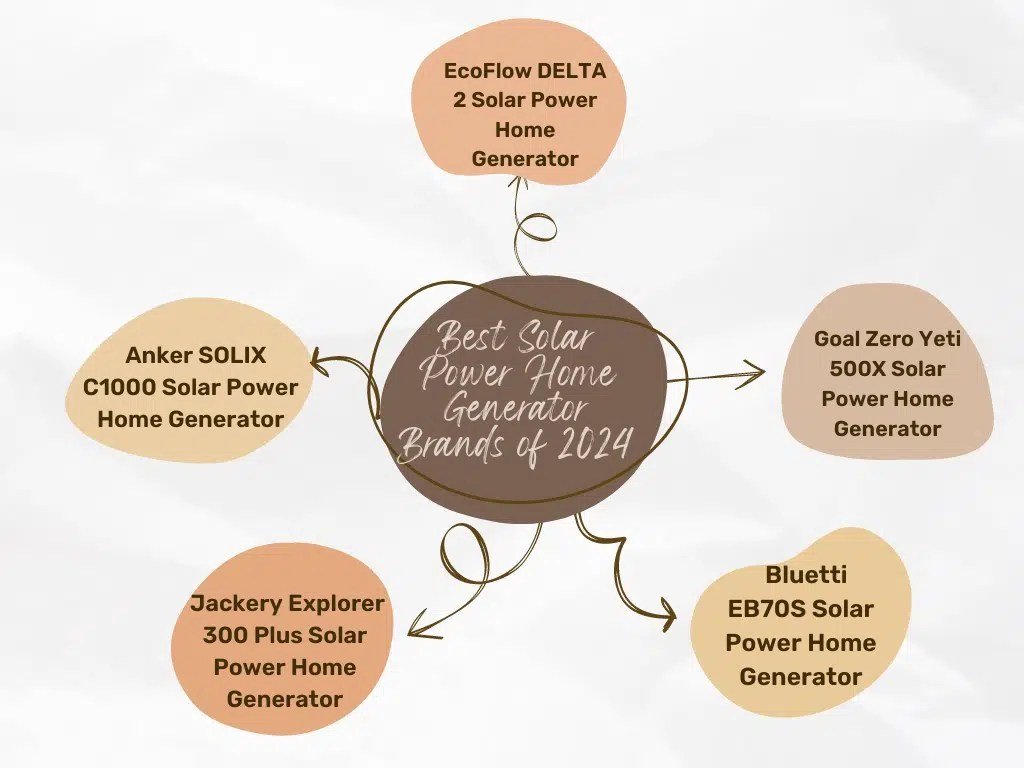
Many manufacturers are leading the charge in this innovative space, offering robust and scalable whole house solutions. Brands like EF ECOFLOW, with models such as the Delta Pro and Delta Pro Ultra, provide high-wattage inverters, modular battery scalability (from 6kWh up to 90kWh), fast recharging, and smart app management to prioritize circuits for heavy loads like central AC. The EF ECOFLOW DELTA Pro 3 boasts ultra-fast switch-over and whisper-quiet operation.
Jackery's Solar Generator 4000 Kit offers significant capacity (4085Wh), rapid charging (80% in 1.6 hours with panels), and expandable storage using LiFePO4 batteries. Other notable contenders include Generac's high-capacity, user-friendly generators, Goal Zero Yeti for portable multifunctional power, Bluetti AC200P for extensive solar input, and Titan Solar Generator known for extreme power output and durability. These examples highlight the diverse and powerful options available to secure your home's energy future.
Embrace a Future of Energy Resilience
A solar powered whole house generator is more than just an appliance; it's an investment in resilience, sustainability, and unparalleled peace of mind. By taking control of your home's energy supply, you're not just preparing for outages; you're stepping into a future where your home is self-sufficient, eco-friendly, and consistently powered by the sun. The power to transform your home's energy story is now within reach.