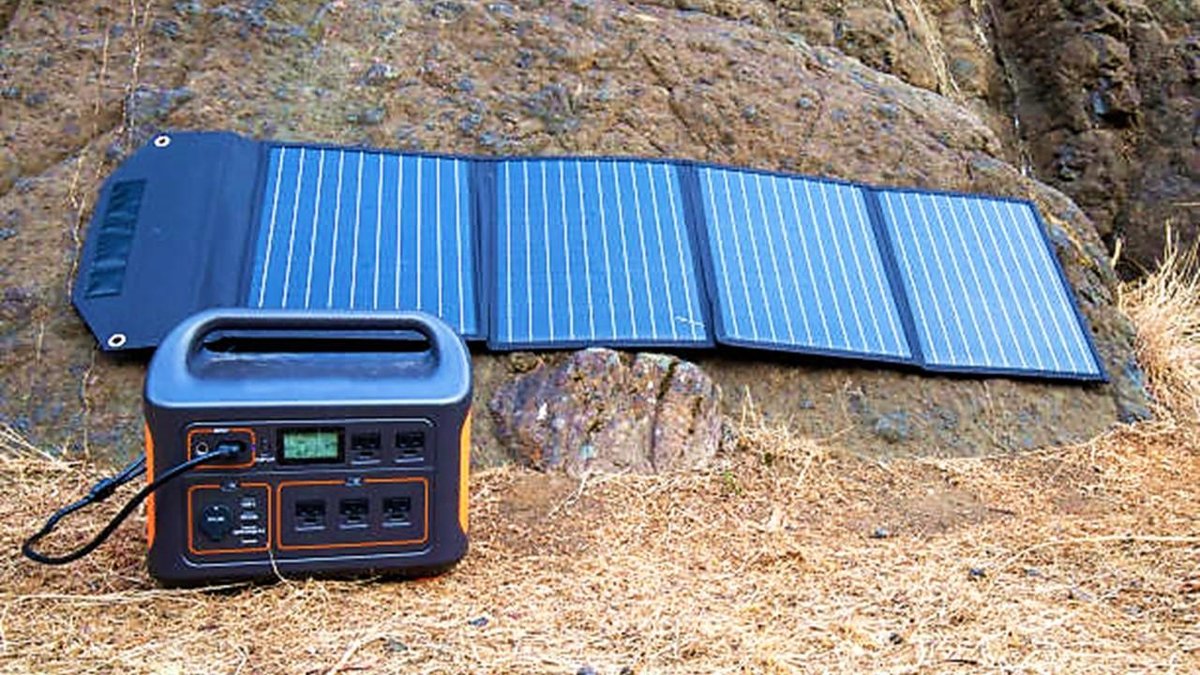
The unexpected silence of a dark home during a power outage is a jarring reminder of our reliance on electricity. But what if that reliance could shift, making you less vulnerable to grid failures and more attuned to sustainable living? That's precisely the promise of Understanding Solar Whole House Generators – a cutting-edge solution for resilient, independent home power.
These aren't your grandpa's noisy, fume-spewing gas generators. Instead, solar whole-house generators harness the sun's power, storing it in advanced batteries to provide seamless, clean backup electricity for your entire home, or just your most critical circuits, whenever the grid falters. It’s about more than just backup; it’s about a smarter, more sustainable way to power your life.
At a Glance: Key Takeaways for Solar Whole House Generators
- What they are: Integrated systems combining solar panels with large battery storage and smart inverters to power your home during outages, or supplement daily use.
- Capacity is Key: Aim for 5kWh+ capacity and 3000W+ output for robust whole-house backup, considering both continuous and surge power needs.
- Battery Superiority: LiFePO4 (Lithium Iron Phosphate) batteries are the industry standard for safety, performance, and long lifespan (3000-6000 cycles).
- Seamless Transition: Professional installation with an automatic transfer switch (ATS) is crucial for whole-house systems, enabling near-instantaneous switchover during an outage.
- Expandability Matters: Many systems allow you to add more battery capacity over time, future-proofing your investment.
- Top Brands: EcoFlow, Jackery, and Anker lead the market with powerful, feature-rich options. Generac also offers comprehensive, grid-integrated solutions.
The Shift to Sustainable Power: What Exactly is a Solar Whole House Generator?
At its core, a solar whole-house generator is a sophisticated energy system designed to capture, store, and deliver electricity to your entire home. Unlike smaller, portable solar generators meant for camping or charging a few devices, these systems are built for scale and integration. Think of it as a personal, mini-power grid for your house, ready to kick in when the main grid goes down, or even to reduce your reliance on utility power daily.
The system typically comprises a few key components:
- Photovoltaic (PV) Panels: These are the workhorses, converting sunlight into direct current (DC) electricity. They're usually installed on your roof, quietly collecting energy.
- Inverter: Solar panels produce DC power, but your home appliances run on alternating current (AC). The inverter intelligently converts DC to AC, making the solar energy usable. For whole-house systems, advanced inverters often manage power flow between solar, battery, and grid.
- Battery Storage: This is where the magic happens. Excess solar energy generated during the day is stored in high-capacity batteries. This stored power is then available for use at night, on cloudy days, or, critically, during a power outage.
- Intelligent Resource Management System (and ATS): This brain of the operation monitors your home's energy usage, battery levels, and grid status. For true whole-house backup, an automatic transfer switch (ATS) is integrated into your home's electrical panel. It detects grid outages and seamlessly switches your home's power supply to the battery system, often in milliseconds, without you lifting a finger.
This integrated approach offers a level of energy independence and resilience that traditional backup generators simply can't match, primarily because they rely on finite fuel sources.
Why Embrace Solar for Your Home's Power? The Benefits Go Beyond Backup
Choosing a solar whole-house generator is a strategic move, offering a compelling array of advantages for modern homeowners.
Uninterrupted Power Resilience: The Core Promise
The most immediate and obvious benefit is unwavering power during grid failures. Whether it's a severe storm, an aging infrastructure issue, or simply a local outage, your home remains powered. Systems with automatic transfer switches (ATS) provide a virtually instantaneous switchover, often within 0-20 milliseconds, ensuring sensitive electronics like computers and medical devices don't even flicker. This enhances not just comfort, but also safety and peace of mind.
Energy Independence and Savings
By generating and storing your own electricity, you naturally reduce your reliance on the utility company. This means less vulnerability to fluctuating electricity prices and, for many, significant long-term savings. Homeowners report savings potentially over 70% on monthly utility costs, especially when combining solar generation with optimized battery usage. Plus, potential tax incentives and rebates can further offset the initial investment, making the financial case even stronger.
Environmental Sustainability
Embracing solar power means choosing a clean, renewable energy source. You'll significantly minimize your household's carbon footprint and decrease reliance on fossil fuels, contributing to a healthier planet. It's an investment in your home and a step towards a more sustainable future.
Quiet, Clean Operation
Unlike gas or diesel generators, solar generators operate silently and produce zero emissions. No more disruptive noise, no more noxious fumes, just clean, quiet power. This makes them ideal for residential areas and for running continuously without impacting your outdoor living spaces or air quality.
Decoding Your Power Needs: Sizing Your Solar Whole House Generator
One of the most critical decisions you'll make is determining the right size for your system. Too small, and you won't power what you need; too large, and you're overpaying. It's a balance of capacity and output.
- Capacity (kWh): This refers to how much energy your battery bank can store. Think of it like the size of your car's fuel tank.
- For basic backup of essentials (fridge, lights, internet, phone charging), aim for a minimum of 2-3kWh capacity. This might get you through a day or two.
- For more comprehensive, whole-house coverage, where you want to run larger appliances or have extended runtime, target 5kWh+ capacity. Many advanced systems are expandable to 10kWh, 20kWh, or even up to 90kWh for extreme resilience.
- Output (Watts): This refers to how much power the generator can deliver at any given moment. Think of it as how fast your car can burn fuel.
- For basic essentials, a 2000W output might suffice.
- For whole-house coverage, you'll want 3000W+ output. This is crucial for handling multiple appliances running simultaneously.
- Running vs. Surge Watts: This is a vital distinction. Many appliances, especially those with motors (refrigerators, AC units, pumps), require a momentary surge of power (2-3 times their running wattage) to start up. Ensure your generator's surge capacity can handle these spikes without tripping or shutting down. For example, an AC unit that runs at 2000W might need 6000W for a brief moment to start.
To accurately size your system, perform a home energy audit. List all the appliances you want to power during an outage, note their running wattage, and identify any significant startup surges. This will help your installer create a custom plan tailored to your specific consumption habits.
The Heart of the System: Battery Technology and Lifespan
The battery is arguably the most crucial component of your solar generator. Not all batteries are created equal, and understanding the technology behind them is key to a reliable, long-lasting system.
Today, LiFePO4 (Lithium Iron Phosphate) batteries are the gold standard for solar generators. Here’s why:
- Safety: They are significantly safer and more stable than older lithium-ion chemistries, with a much lower risk of overheating or thermal runaway.
- Performance: They perform well across a wide range of temperatures, making them suitable for various climates.
- Lifespan: This is where LiFePO4 truly shines. They typically offer 3000-6000 charge cycles before degrading to 80% of their original capacity. In practical terms, this means a battery charged daily could last 8-16 years or more. This is a massive improvement over older battery types that might only offer 500-1000 cycles.
When comparing systems, always prioritize those using LiFePO4 batteries and check their specified cycle life to gauge long-term value.
Keeping the Lights On: Output, Surge, and Seamless Switching
Beyond just capacity, how a solar generator delivers power is paramount, especially for integrated whole-house systems.
- Continuous Output and Surge Capacity: As mentioned, your generator needs to handle both the steady draw of multiple running appliances and the momentary power spikes of motors starting up. Ensure the continuous output matches your combined typical load, and the surge capacity can absorb those temporary demands without shutting down.
- Automatic Transfer Switches (ATS): For a truly seamless whole-house experience, an ATS is non-negotiable. This device detects when grid power is lost and automatically switches your home's electrical load to the solar generator's battery bank. This transition is often so fast (e.g., 20ms auto-switchover for EcoFlow Smart Home Panel 2, or even 0ms uninterruptible power supply (UPS) for Jackery Solar Generator 5000 Plus) that most electronics won't even register a blip. This instant switchover is critical for protecting sensitive devices and maintaining continuous operation of essential systems.
Fueling Up: Charging Options and Speed
A versatile solar generator should offer multiple ways to recharge its batteries efficiently.
- Solar Charging: This is the primary method, harnessing energy from your PV panels. Charging times vary depending on panel wattage, battery size, and sunlight conditions, typically taking 4-8 hours with optimal sunlight for a full charge.
- AC Wall Charging: Plug into a standard wall outlet for rapid recharging. Premium units can recharge fully in 1-2 hours via AC, while budget models might take 6-8 hours. Some advanced systems can leverage 240V outlets for even faster charging.
- Car Charging: For on-the-go or emergency top-ups, many portable units can charge via a 12V car adapter.
- EV Station Compatibility: Some high-end systems, like the EcoFlow DELTA Pro Ultra, can even recharge at EV charging stations, offering incredibly fast top-offs (e.g., a full recharge in just 2 hours).
Look for units that support pass-through charging, meaning they can power your devices while simultaneously recharging their internal batteries. This is a common feature in modern solar generators.
Future-Proofing Your Power: Expandability and Modularity
The world of energy is constantly evolving, and your needs might too. Prioritizing systems that offer expandability is a smart long-term strategy.
Many top solar generators feature a modular design, allowing you to add extra battery units to multiply your storage capacity. For instance, the EcoFlow DELTA Pro Ultra can start at 6144Wh and expand up to an incredible 90kWh. Jackery's Solar Generator 5000 Plus can expand from 5040Wh to 60kWh. This flexibility means you can start with a system that meets your current needs and budget, then scale up as your power demands grow or as you desire longer runtime. It's a key feature for ensuring your investment remains relevant for years to come.
Smart Home, Smart Power: Advanced Features and Integration
Modern solar whole-house generators aren't just brute force; they're intelligent systems designed for convenience and efficiency.
- App Control: Most premium units come with intuitive smartphone apps that allow you to monitor power input/output, battery status, estimated runtime, and even control settings remotely. You can receive alerts during outages or when battery levels are low.
- Energy Management: For fully integrated whole-house systems, these intelligent platforms can prioritize power delivery to essential circuits during an outage, or even manage energy flow to optimize daily usage, potentially drawing from solar/battery during peak utility rates and recharging when rates are lower.
These smart features transform a simple power backup into a sophisticated home energy management system.
Installation: DIY vs. Professional for Whole-House Systems
The installation process varies significantly based on the type of solar generator.
- Portable Units: These are typically plug-and-play. You charge them, plug in your devices, and you're good to go.
- Whole-House Systems with Automatic Transfer Switches: This is where professional expertise becomes essential. Integrating a solar generator with your home's main electrical panel via an ATS requires the knowledge and skill of a licensed electrician. They will ensure safe, code-compliant wiring and proper functionality. The installation often involves assessing your home for optimal panel placement, potentially making roofing enhancements, and then linking the panels, inverter, battery storage, and ATS seamlessly into your existing electrical infrastructure.
While the upfront cost for professional installation is a consideration, it ensures safety, reliability, and compliance, which are paramount for a system powering your entire home. The good news is that government policies and subsidies, like Renewable Energy Certificate (SREC) markets, are promoting adoption, and 85% of installers using NREL’s SolarAPP+ permitting software reported easier permitting processes.
How Long Will It Last? Understanding Runtime
"How long can it power my house?" is a common and critical question. The answer, as you might guess, depends on two main factors: your generator's capacity and your home's power consumption.
Let's take an example: a 5kWh generator.
- If you're only powering essential circuits (like a refrigerator, some lights, Wi-Fi, and phone charging), which might consume 1-2kWh per day, this 5kWh system could power those essentials for 2-5 days.
- However, if you start running energy-intensive appliances like a central air conditioner, an electric oven, or a clothes dryer, your runtime will dramatically decrease, potentially to just a few hours.
Understanding your daily energy usage during an outage scenario is key to estimating realistic runtime. This is where the expandability of many systems truly shines, allowing you to add more battery capacity for longer durations.
Top Contenders for Your Home: A Look at Leading Solar Whole House Generators
The market for solar whole-house generators is robust, with several manufacturers pushing the boundaries of capacity, output, and integration. Based on evaluations focused on practical performance (70%) and innovative features (30%), here are some of the standout options:
Overall Best Whole-Home Backup: EcoFlow DELTA Pro Ultra with Smart Home Panel 2
This system is engineered for seamless, comprehensive home integration.
- Facts: Offers a massive 7200W output and is incredibly expandable, starting at 6144Wh and scaling up to 90kWh with additional batteries. Its Smart Home Panel 2 integrates directly with your home electrical panel, featuring an ultra-fast 20ms auto-switchover. It can even power heavy appliances like a 3-ton central AC while simultaneously charging. App control and dual voltage (120V/240V) add to its versatility.
- Insight: This is as close as you can get to a silent, fume-free, seamless whole-house generator experience, rivaling traditional gas systems in capability. It represents a significant investment and requires professional electrical knowledge for installation.
Premium Whole House Solutions: Jackery Solar Generator 5000 Plus
Jackery's entry into the high-capacity market provides professional-grade reliability.
- Facts: Features a 5040Wh base capacity, expandable to 60kWh. It boasts 0ms uninterruptible power supply (UPS) functionality for truly instant transition. Dual voltage (120V/240V) and app control are standard. It typically includes 500W solar panels.
- Insight: Ideal for those seeking a permanent, robust backup solution with zero interruption, though its high cost and substantial weight make it less portable.
Advanced Portable & Expandable Backup: Jackery HomePower 3600 Plus
Where portability meets serious power.
- Facts: Offers 3.6kWh capacity and 3600W output. Designed for revolutionary portability with wheels and a telescopic handle. Uses ceramic membrane battery cells for enhanced safety. Fast charging achieves a full recharge in just 2 hours with hybrid AC+DC input. Expandable to 21kWh per unit, or even 43kWh with multiple units.
- Insight: This model combines significant power with surprising maneuverability, making it a versatile choice for those who might need to move their power source or use it in various locations.
High-Performance Home Backup: EcoFlow DELTA Pro
A powerful workhorse for serious home backup.
- Facts: Features a 3600Wh capacity (expandable up to 25kWh). It recharges rapidly, going from 0-100% in just 1.8 hours with a 240V outlet. Two units can be paired for a massive 7200W output. App control is standard.
- Insight: Durable and high-performing, but at 99 pounds, it's less portable than some other options, making it more suitable for stationary home backup.
Fast-Charging Home Backup: EcoFlow DELTA 2 Max
Designed for minimal downtime and quick recovery.
- Facts: Provides 2048Wh capacity and 2400W output. Its standout feature is incredibly fast charging, reaching 80% in just 43 minutes. It can run essentials for over 24 hours and is expandable to 6kWh. Operates quietly, as low as 30dB. Uses LFP batteries with 3000 cycles to 80%.
- Insight: Perfect for those who prioritize rapid recharging and reliable, quiet power for essential circuits. The base capacity might be small for larger homes or extended outages, so expansion batteries might be necessary.
Long-Lasting Reliability: Anker SOLIX F2000
Built to endure with a focus on longevity.
- Facts: Delivers 2048Wh capacity and 2400W output. Boasts a remarkable 10-year lifespan due to its InfiniPower technology. Fast recharge (0-80% in 1.4 hours) and SurgePad technology that safely handles startup surges up to 3600W. Includes an RV port and a generous 5-year full-device warranty.
- Insight: From a trusted brand known for quality, this unit prioritizes durability and peace of mind, although it's less expandable and portable than some competitors.
Entry-Level Home Backup (for Essentials): EcoFlow DELTA2 with Solar Panel
An excellent starting point for basic power needs.
- Facts: Offers 1024Wh capacity (not truly whole-house, but great for essentials). Comes with a 220W bifacial solar panel for enhanced energy capture. Fast AC charging achieves 0-80% in about 1 hour. Features a long-lasting LFP battery (3000+ cycles) and 15 outlets. Highly portable.
- Insight: A compact and affordable option perfect for essential backup, offering a taste of solar independence without the full whole-house investment.
Balanced Performance: Jackery HomePower 3000 with Solar Panels
A strong contender for general homeowners seeking a balance of features and price.
- Facts: Delivers 3072Wh capacity and 3600W output. Includes 20ms UPS functionality and 400W solar panels. Features ChargeShield 2.0 technology and a 4000-cycle lifespan.
- Insight: This system strikes a great balance of power, features, and price, making it a solid choice for many homeowners, though it's not expandable beyond its base capacity.
Generac's Comprehensive Approach to Whole-House Solar
While the portable solar generator brands excel in modularity and quick deployment, traditional power solution providers like Generac have also entered the solar whole-house market with integrated, comprehensive systems.
A Generac whole-house solar generator is typically a fully engineered system designed to integrate seamlessly with your home's existing infrastructure.
- Functionality: Generac systems leverage photovoltaic (PV) panels to convert sunlight into DC electricity. An inverter then transforms this into usable AC power for your home, while advanced battery storage retains any surplus. These units often feature greater capacity and quicker charging solutions, coupled with intelligent resource management systems that prioritize power to essential devices during outages.
- Components: These robust systems include the PV panels, a powerful inverter, substantial battery storage (often several units), and a sophisticated intelligent resource management system, all designed to work in concert.
- Installation Process: The journey begins with a detailed consultation where a qualified installer assesses your specific power requirements and evaluates your home for optimal panel placement. A custom plan is then developed, followed by the professional installation of panels, inverter, and battery storage. Rigorous testing ensures everything functions perfectly, and you'll receive thorough guidance on operation and maintenance.
Generac's offerings focus on providing a complete, professionally installed solution that delivers robust energy independence and resilience.
To dive deeper into the specifics of these powerful systems and explore various options, you might want to explore solar whole house generators available on the market.
Making the Smart Choice: Key Considerations Before You Buy
Investing in a solar whole-house generator is a significant decision. Here's a checklist of key considerations to guide your choice:
- Household Power Consumption: This is your starting point. Diligently assess your typical electricity usage and, more importantly, what you absolutely need to power during an outage. This will directly dictate the required generator size (capacity and output).
- Sunlight Potential: Evaluate your property for optimal solar exposure. Are there trees or buildings that cast significant shadows? A qualified installer can conduct a site assessment to determine the best panel placement and estimated solar yield.
- Budget: Solar whole-house generators represent a considerable upfront investment, with average costs ranging from $5,000 to $15,000, depending on capacity and features. However, remember the long-term savings on utility bills (up to 50%) and the intangible value of energy independence and peace of mind.
- Local Incentives and Rebates: Don't overlook potential financial assistance. Investigate federal, state, and local programs, tax credits, or rebates that can significantly reduce your initial costs. These incentives often make solar solutions more accessible.
- Installation Requirements: For integrated whole-house systems, professional installation is non-negotiable. Factor in the cost and logistics of hiring a licensed electrician.
- Warranty and Support: Look for reputable brands offering comprehensive warranties on both the generator unit and its batteries, along with accessible customer support.
Beyond the Initial Spark: The Growing Solar Market & Your Role
The worldwide photovoltaic sector is experiencing rapid expansion. The demand for PV systems, particularly when combined with battery storage for enhanced resilience, is skyrocketing. Projections indicate that total installed PV capacity needs to exceed 6,000 GW by 2030 to meet global energy goals.
The U.S. alone saw over 30 GW of PV installations through Q3 2024, demonstrating robust growth. This isn't just a trend; it's a fundamental shift in how we generate and consume energy. As a homeowner considering a solar whole-house generator, you're not just buying a product; you're participating in a crucial transition toward a more sustainable and resilient energy future. The industry is dynamic, with innovations continually emerging, and a diverse workforce, including nearly 40% women in the photovoltaic sector, driving its progress.
Your Next Step Towards Energy Resilience
Understanding solar whole-house generators reveals a path to unmatched power resilience, significant savings, and a lighter environmental footprint. You now have a comprehensive grasp of what these systems entail, how to size them, what technologies to prioritize, and what questions to ask.
The next step is action. Start by assessing your home's unique power needs and sunlight exposure. Then, seek out qualified professionals for a consultation and customized quotes. With careful planning and the right system, you can transform your home into a bastion of self-sufficient power, ready for anything the future holds.